
About
The patient, before the procedure.
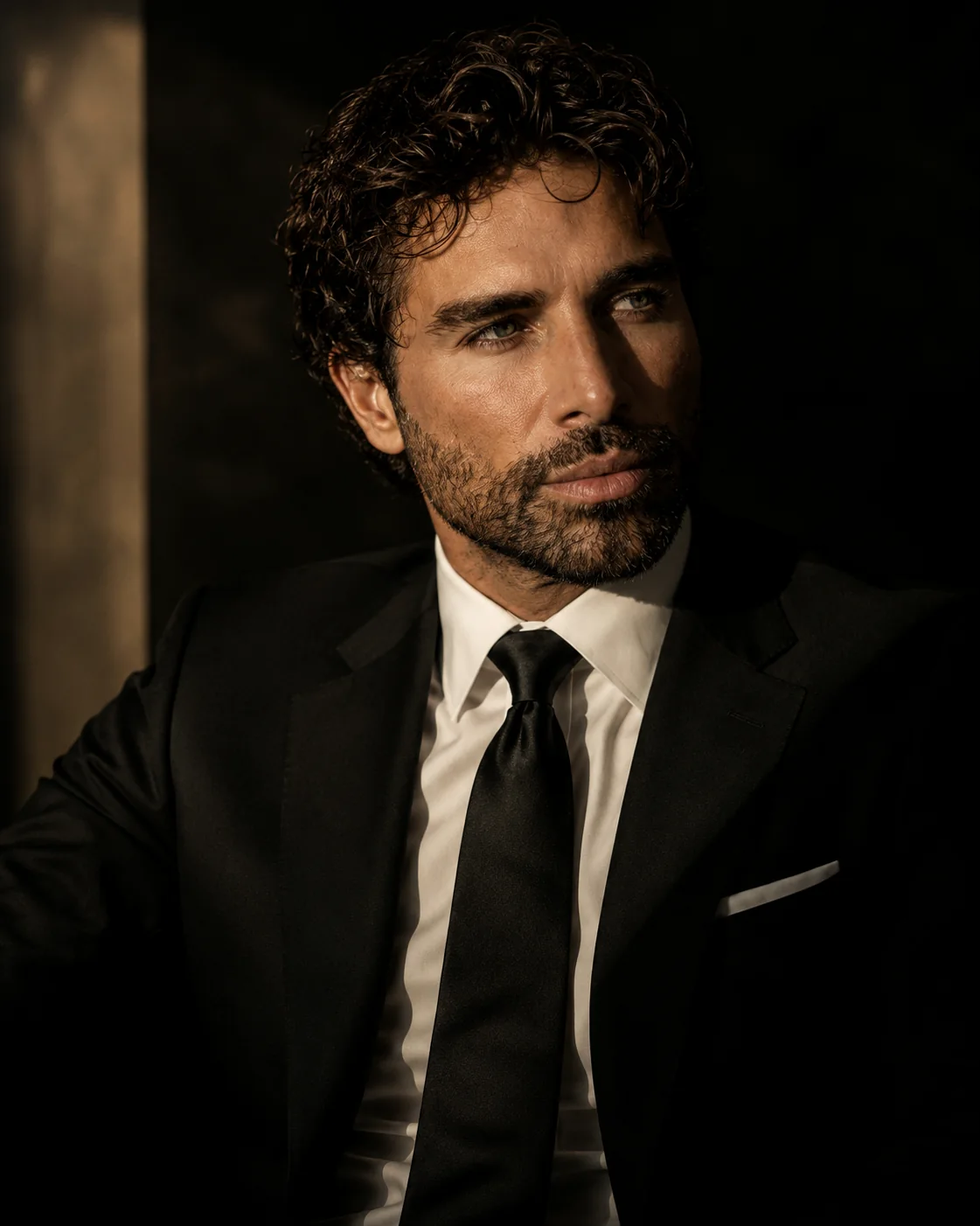
I grew up within medicine. My father, also a dermatologist, has practised since 1970; from childhood I went with him to his consulting room, watching how he examined, how he questioned, how he looked at whoever was before him. My mother is a psychologist, and from her I learnt something I could not then name: that listening is a labour, and that behind what someone says there is usually something that has yet to find its words.
I also grew up within a tradition that grants language and the care of the other a central place. I did not think of it as a calling at the time. It was simply the ground on which I was formed, before I chose to form myself within it.
On completing medical school I soon encountered a limit. The ten or fifteen minutes that conventional practice allots to each patient were insufficient for me to do well what I take to be the physician’s first task: to understand the person before me. Not only the symptom, but the person — their history, their moment, what the body expresses before the patient formulates it.
That led me to study beyond my initial training. Regenerative medicine. Osteopathy. Physical medicine and rehabilitation. Longevity medicine. I did not pursue these as a collection of credentials, but because each one offered a tool the previous ones had not quite given me for treating the patient more fully.
Over the years I came to place ever greater importance on something that is not taught in any programme: listening well. Taking the time, paying real attention, letting the patient say what they rarely have the chance to say. It is not a complementary technique or a courtesy: it is part of the clinical work, and one of the things contemporary medicine, for lack of time, has steadily set aside.
I do not believe it is a gift. It is a craft cultivated patient by patient. And it is, perhaps, what I am most interested in passing on to other physicians.
What I know I did not learn only from books. I learnt it by practising. Over the years I have come to see something that now seems obvious to me: that the patient’s state of mind, their context, what they carry beyond the reason for consultation, influence how they recover. A clinical picture read in its full context responds better than a symptom treated in isolation.
It is not a new idea in medicine. But it is easy to forget. Attending to the person, and not only to the lesion, improves outcomes. That conviction — easy to state, difficult to sustain in daily practice — is what organises the way I work.
I wrote The Coherence Aesthetic after nearly twenty years of practice. It did not come from theory: it came from the patients. From the understanding that dermatology and aesthetics — the disciplines we tend to associate with the surface — were, precisely, the place where I could formulate a method I had already been practising: understand before intervening, regulate before refining.
A patient, on reading it, gave me back something I had not known how to say of myself:
He was right. The method’s four operations — understand, regulate, regenerate, refine — are not exclusive to aesthetic medicine. They are a way of practising medicine. The way I would wish anyone I love to be attended to, when they need a physician’s care.
· · ·
Today I practise in Lima, in a deliberately small setting: a single location, long consultations, one person at a time. Most of those who come do so through the book or by another patient’s recommendation. It is the natural consequence of a way of working that seeks not volume, but depth.
I continue to write. Not to complete a body of work, but because each year of practice returns questions to me that the previous book left open.
“I always feel there is something more to give.”
Franco Teevin
Lima, Perú
www.francoteevin.com
Para propuestas profesionales: francoteevin@clefore.com
Para consultas clínicas: Cléfôre® | www.clefore.com